Books
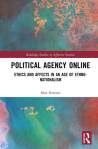
Political Agency Online (forthcoming September 2025)
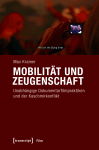
Mobilität und Zeugenschaft
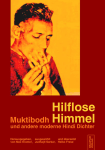
Hilflose Himmel
Papers
Peer-Reviewed Articles and Book Chapters

Kramer, Max. 2025. ‘Facing Concepts: Academic Star Personas in “The Toxic Reigns of Resentment”’. Journal for Cultural Research, 20 February 2025.https://www.tandfonline.com/doi/abs/10.1080/14797585.2025.2467061
Kramer, Max. 2025. “Strategies and Tactics:
A Spinozist Approach to Political Agency Online”. Digital Culture & Society 10 (1). doi.org/10.14361/dcs-2024-0108
Kramer, Max and Jürgen Schaflechner. 2024. Special Issue of Dialectical Anthropology “The Limits of Visibility”. 48 (1). https://link.springer.com/journal/10624/volumes-and-issues/48-1
Kramer, Max. 2024. “Apocalypse now? – The Last Generation in digital capital’s affective ecology”. Communications 50 (1). https://doi.org/10.1515/commun-2023-0154
Udupa, Sahana, and Max Kramer. 2023. “Multiple Interfaces: Social media, religious politics, and national (un)belonging in India and the diaspora”. American Ethnologist. https://doi.org/10.1111/amet.13117.
Kramer, Max. 2022. “Beyond the Identitarian Deadlock: Why Mobile Methods Are Useful for Studying Media in Zones of Conflict.” Studies in Indian Politics, 10(2), 289–297. https://doi.org/10.1177/23210230221135822
Kramer, Max. 2022 “A Bird at my Window”: Communicative Community and Contextual Visibility. In Conference Publication: How to Live Together? Circulatory Practices and Contested Spaces in India. Ed. by Fritzi-Marie Titzmann & Nadja-Christina Schneider. https://doi.org/10.21428/f4c6e600.e29a7d00
Schaflechner, Jürgen and Max Kramer. 2021. “Film, Photo, and Text: Relation-Making, Intensive Genres, and Realism.”Dastavezi(3): 4-14.
Kramer, Max. 2021. “The Moral Economy of Extreme Speech: Resentment and Anger in Indian Minority Politics“. In Digital Hate: The Global Conjuncture of Online Extreme Speech, edited by Sahana Udupa, Iginio Gagliardone, and Petter Hervik. Bloomington: Indiana University Press.
Ettmüller, Eliane, Sarah Ewald and Max Kramer. 2021. “Traveling Tariqa–Ten Years Down the Road into Sufis Entangled.”Dastavezi (3): 55-67.
Kramer, Max. 2021. “Plural Media Ethics? Reformist Islam in India and the Limits of Global Media Ethics“. Dialectical Anthropology, 45 (3): 275-96. https://doi.org/10.1007/s10624-021-09626-5.
Kramer, Max, and Jürgen Schaflechner. 2020. “Relation-Making, Time, and Critique: A Slow Theory Approach to Film and Social Science“. Dastavezi: The Audio-Visual South Asia 2: 1–11.
Kramer, Max. 2020. “Online Daʿwat, Nation-State and the Language Use of the Jamaat-e-Islami in India“. Zeitschrift für Indologie und Südasienstudien 36: 53–76.
Kramer, Max, and Jürgen Schaflechner. 2019. “Between Documentary and Dastavezi: A Slow-Paced Approach to Theorizing Transnational Film-Practices“. Dastavezi: The Audio-Visual South Asia 1: 1–11.
Kramer, Max. 2018. “At the limit of the personal: The Kashmir conflict via explorations in the ethical space of film“. Interactions: Studies in Communication & Culture 9 (3): 289–301. https://doi.org/10.1386/iscc.9.3.289_1.
Kramer, Max. 2017. “Mobilizing Conflict Testimony: A Lens of Mobility for the Study of Documentary Film Practices in the Kashmir Conflict“. Social Sciences 6 (88): x. https://doi.org/10.3390/socsci6030088.
Kramer, Max. 2016. “Skeptical Political Mimesis: Sanjay Kak’s “Series on Indian Democracy” and the Voice of Documentary“. Belgrade Journal of Media and Communications 6 (9): 35–47.
Kramer, Max. 2015. “Filming Kashmir: Emerging Documentary Practices“. In New Media Configurations and Socio-Cultural Dynamics in Asia and the Arab World, herausgegeben von Nadja-Christina Schneider und Carola Richter, 345–67. Nomos.
Kramer, Max. 2015. “Verlust, Erinnerung und Versöhnung? Repräsentationen des Kaschmirkonflikts und des Exils der Kashmiri-Pandits in der Megha-Episode von Onirs Film ‚I am‘“. Zeitschrift für Indologie und Südasienstudien 31: 47–68.
Kramer, Max. 2014. Sprachliche Imagination im Film – Tapori Hindi und die Verwendung sprachlicher Register im populären indischen Kino. Working papers in modern South Asian languages and literatures. Heidelberg: Heidelberg, Univ., Magisterarbeit, 2014. http://archiv.ub.uni-heidelberg.de/savifadok/3157/.
Papers
Reviews and other writings
Bazaz, Abir in conversation with Max Kramer. 2021. “Kashmir Cultural Memory through the Lens of Film: Paradise on a River of Hell revisited.”Dastavezi (3):15-21
Kramer, Max. 2021. “Schleiter, M., & de Maaker, E. (eds.) (2020). Media, indigeneity and nation in South Asia. London: Routledge. 298 pp.” Communications, https://doi.org/10.1515/commun-2021-0043
Kramer, Max. 2020. “Dystopian Futures on Netflix: Converging Genres, Ethics and Narrative in Ghoul“. IAAW Newsletter, 2020.
Kramer, Max. 2015. “Atrocity Images, Archive and Film Form in Sanjay Kak’s Jashn-e-Azadi“. Mediaresearch@IAAW (blog). 17. Februar 2015. https://blogs.hu-berlin.de/mediaiaaw/2015/02/17/atrocity-images-archive-and-film-form-in-sanjay-kaks-jashne-e-azaadi/.
Kramer, Max. 2016. „Azadi ‚von‘ Indien oder ‚in‘ Indien? Kaschmiris posten auf Facebook zur Politik der Postposition“. Mediaresearch@IAAW (blog). 10. März 2016. https://blogs.hu-berlin.de/mediaiaaw/2016/03/10/azadi-von-indien-oder-in-indien-kaschmiris-posten-auf-facebook-zur-politik-der-postposition/.
Kramer, Max. 2016. „Songs to Live By – A Review of a Series of Six Films by Tarun Bhartiya“. Mediaresearch@IAAW (blog). 29. August 2016. https://blogs.hu-berlin.de/mediaiaaw/2016/08/29/songs-to-live-by-review-of-a-series-of-six-films-by-tarun-bhartiya/.
Kramer, Max. 2014. „Qaid – jan ḍijiṭal film ke zamāne meṃ“. Begleitheft des Cinema of Resistance Udaipur, 2014.
 Max Kramer